
Nelson & Associates Realtors®... Call Today 608-438-5230 • Jon@jonnelson.com
Your Complete Guide to South Central Wisconsin Real Estate for Sale.
Welcome to the Tour of the Historic Architecture of University Heights
Presenting this collection is a privilege, because University Heights offers one of the most remarkable displays of early twentieth‑century residential architecture in the Midwest. The neighborhood was shaped by owners who wanted homes that reflected their ambitions and by architects who saw the Heights as an opportunity to explore new ideas. What emerged was an informal contest of creativity, a showcase of distinctive styles long before Madison had an organized Parade of Homes. Walking these streets is not simply a neighborhood tour. It is a step into a bygone era where nationally known architects and accomplished residents created some of their most significant work. Please enjoy this look at the extraordinary architectural heritage that continues to define University Heights.
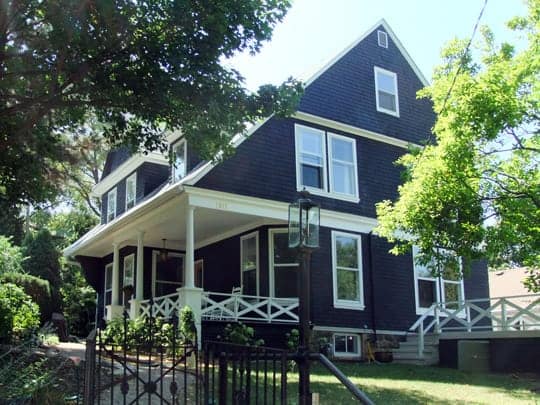
Shingle Style
Hillyer House - 1895
Primarily an East Coast style, the home was built for University of Wisconsin professor of Chemistry Homer W. Hillyer. The use of shingles to side the house in a smooth, tight fashion, distinguished this style of home, popular between 1880 and 1900 from other styles that used shingles to draw attention to ornamentation as often associated with the Queen Anne style for instance. This is the only true Shingle Style home in University Heights.
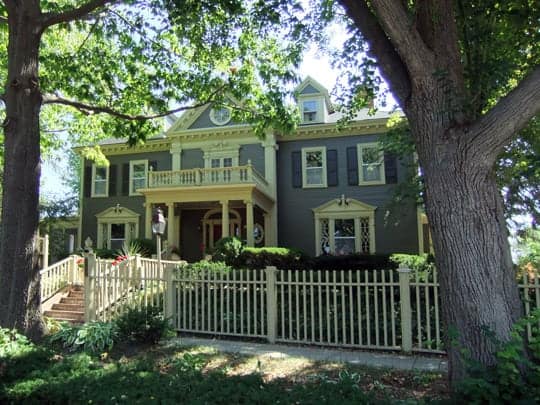
Georgian Revival
The Ely House – 1896
The Ely house is nearly a perfect example of the Georgian revival style and was built in University Heights in 1986 for professor Richard T. Ely and his wife Anna. Ely was a professor of economics at the University of Wisconsin where he organized the school of economics, political science and history. The home was designed by the noted Chicago architect Charles Sumner Frost.
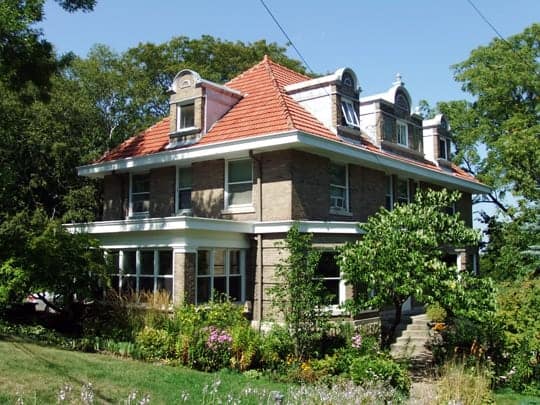
Chicago Progressive
The Jennings House – 1903
John T.W. Jennings was an architect himself, having graduated from New York University in 1877. He served as the supervising architect for the University of Wisconsin. Jennings helped design Agricultural Hall, the Horticulture building, the Agriculture Engineering building, the Dairy Barn and the Stable Barn. When he designed his own home in University Heights, he explored a style that is often called “Chicago Progressive” as it freely combines elements of modern and historical derivation.
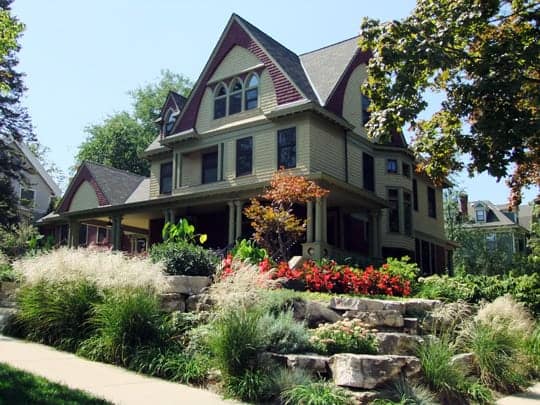
Queen Anne
The Kahlenberg House – 1903
Built in University Heights in 1903 for Louis Kahlenberg, professor and American pioneer in physical chemistry. Prof. Kahlenberg’s beautiful Queen Anne home represents the transition from the beautiful and ornate Queen Anne style to the more reserved revival styles that were gaining in popularity at the turn of the century. A very unusual aspect of this lovely University Heights home is the use of gothic style pointed arch windows in the top floor and the paired columns on the front porch.
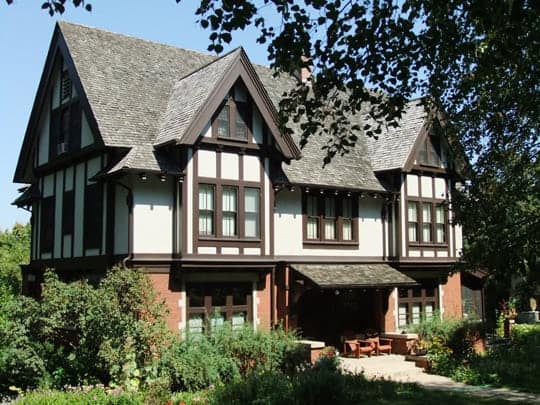
Tudor Revival
The Pence House – 1909
Designed by the Madison firm of Claude and Starck, this amazing Tudor Revival home was originally built in University Heights in 1909 for University professor of railroad engineering William D. Pence and his wife. With three full floors of living space along with a full attic and full basement the Pence’s employed a house staff of two just to keep everything neat and tidy. After the Pence years the house was occupied by a fraternity (Theta Xi) but was later returned to a private University Heights residence when it was purchased in 1933 by Arlie W. Schorger and his wife, who lived there until his death in 1972. Professor Schorger was a professor of wildlife ecology and a prize-winning natural history author.
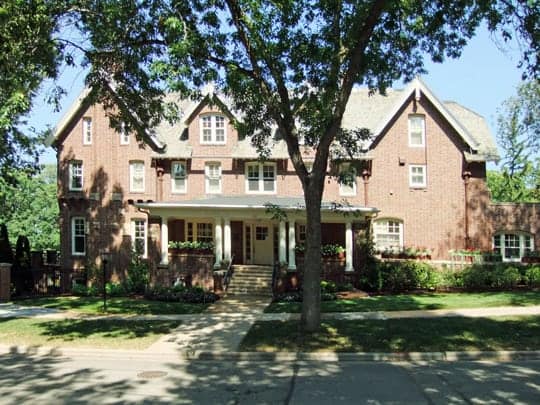
English Style
The Olin House -1911-1912
One of Madison’s most successful attorneys, John M. Olin and his wife Helen moved into their new home in University Heights in 1912. Designed by the Milwaukee firm of Ferry and Clas, this brick manse looks toward beautiful Lake Mendota. Upon Olin’s death, the house and grounds were deeded to the University to be used as the President’s home in University Heights. It is a spectacular example of English Style architecture with its high peaked roofs and dormers. Olin was a tireless philanthropist and was a driving force behind the Madison Park and the Pleasure Drive Association.
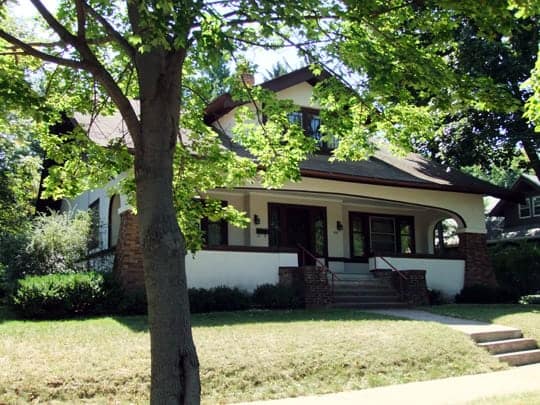
The Bungalow
The Fett House – 1913
Pharmacist George Fett was an upwardly mobile family man who, like many of his fellow University Heights neighbors, built a succession of new and larger homes in the Heights as success and family size grew. The Bungalow, one of my personal favorites, is typically much larger inside than its exterior would suggest. It is a quintessential American design typified by rounded openings, a full, welcoming front porch and massive dormers. This University Heights home is one of the largest Bungalow style homes in all of Madison.
.
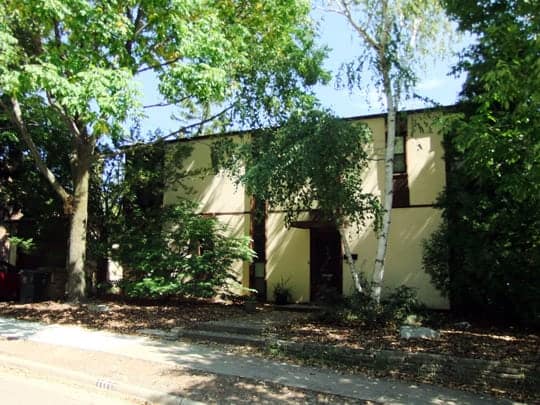
International Style
The Morehouse House – 1936-1937
The International Style was greatly influenced by the contemporary European designs of which the Bauhaus School in Germany was a leading agent of change. Flat roofs, straight walls and minimal ornamentation punctuated with windows and doors that appear to be punched into the surface are the hallmarks of this design. Architect George F. Keck designed the home for Edward A. Morehouse and his wife Anna in 1936. Keck, who was a state Public Service Commission economist, surprised the neighborhood with what would have been a major departure into the very modern world of International style.
I hope you have enjoyed this little tour of University Heights architecture and that you will take some time to explore University Heights!
About This Page
- Accurate Information — This architectural tour is curated and maintained by a licensed Wisconsin broker who knows University Heights.
- Local Expertise — Content reflects verified historical sources and long‑standing familiarity with the neighborhood.
- Clear Presentation — No ads, no portal clutter, no fluff.
- Direct Connection — Your questions are answered by a real broker, not a national portal.
Prepared by Jon H. Nelson, MBA Broker/Owner, Nelson & Associates Realtors